Source Slow Rising PU Squishy Toy for Stress Relief, Gifts, and Decor
Explore 30 listings for Slow Rising PU Squishy Toy options suitable for stress relief, party favors, and home decoration. Buyers can compare materials, certifications, and customization features across multiple suppliers.
Key considerations
Products List


Cute Slow Rising Squishy Toy Perfect for Relaxing Mood and Decompression
$0.70 - $4.50
MOQ: 100 Pieces


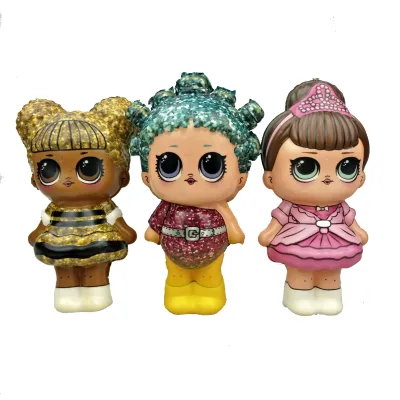
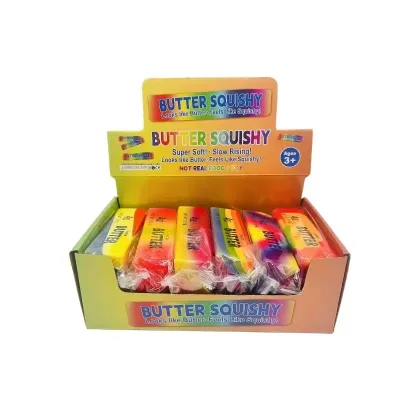


Slow Rising Realistic Butter Stick Squishy Toy for Stress Relief Sensory
$2.20 - $3.78
MOQ: 100 pieces


Comprehensive Sourcing Guide
Slow Rising PU Squishy Toy Sourcing Guide
Sourcing slow rising PU squishy toys requires a nuanced understanding of material science, regulatory compliance, and supply chain logistics. These products, often categorized under classic toys or stress-relief items, rely heavily on polyurethane foam properties to deliver the characteristic "slow rise" effect that defines their market appeal. Buyers must navigate a landscape where product attributes vary significantly between suppliers, from scent profiles and color variations to specific packaging methods and origin locations. This guide provides a structured approach to evaluating suppliers, verifying technical specifications, and ensuring commercial viability without relying on unverified claims.
The procurement process begins with recognizing that "slow rising" is a functional observation rather than a universal guarantee. While many listings advertise this feature, the actual performance depends on the density of the PU foam and the manufacturing process. Buyers should treat product attributes as observations to be verified rather than absolute claims. This disciplined approach ensures that the final product meets the intended use case, whether for retail display, promotional giveaways, or direct consumer sale, while minimizing the risk of receiving substandard or non-compliant inventory.
Product Scope and Observed Listing Signals
The current market for slow rising PU squishy toys exhibits a wide range of product variations, with observed price points ranging from $0.1 to $4.5 USD per unit. This broad spectrum reflects differences in material quality, complexity of design, and order volume. Buyers should note that the minimum order quantity (MOQ) typically ranges from 100 to 3,600 pieces, with some suppliers setting specific thresholds such as 1,800 pieces for certain models. Understanding these commercial signals is crucial for aligning procurement strategies with budget constraints and inventory turnover expectations.
Product listings often highlight specific styles, such as unicorn themes, food replicas like donuts or fruits, and plant shapes, catering to diverse consumer preferences. Attributes such as "Eco-Friendly Material," "Scented," and "Multi Colors" are common selling points, but they require verification. For instance, while some products are described as having a "scented soft slow rising" surface, the intensity and longevity of the scent are not standardized. Buyers must distinguish between generic PU foam toys and specialized designs that may involve additional processing steps, which can impact both cost and lead times.
Technical Specifications to Verify
Verifying the material composition is the first critical step in technical due diligence. The core material for these toys is typically polyurethane (PU) foam, but the density and elasticity can vary significantly between suppliers. Buyers should request samples to test the "slow rise" characteristic, ensuring that the foam returns to its original shape at a consistent rate. Additionally, the surface finish, whether smooth, textured, or scented, should be evaluated for durability and resistance to tearing or degradation over time.
Packaging specifications also play a vital role in product protection and retail readiness. Observed packing methods include OPP bags, individual boxes, and carton packaging, with dimensions such as 474732cm and weights around 21kg for bulk shipments. Buyers must confirm whether the packaging is suitable for the intended distribution channel, as fragile PU toys require adequate cushioning to prevent damage during transit. Furthermore, the product model numbers, such as JY055 or SRT--3, should be cross-referenced with the supplier’s catalog to ensure accurate ordering and inventory management.
Compliance and Safety Documentation
Safety compliance is non-negotiable for toy procurement, particularly when targeting markets with strict regulatory frameworks. Certifications such as EN71, CE, RoHS, ASTM, and REACH are commonly cited by suppliers, but buyers must verify the validity and scope of these documents. For example, EN71 certification is essential for the European market, while ASTM standards are critical for the United States. Buyers should request copies of the test reports and confirm that the tests were conducted on the exact product variant being ordered, not just a generic sample.
Age grading is another critical compliance factor. Products are often labeled for age groups such as 3+, 5+, or specific ranges like 5 to 7 years and 8 to 13 years. Buyers must ensure that the product’s physical characteristics, such as size and material hardness, align with the stated age recommendations to prevent choking hazards or other safety risks. Additionally, the "Environmental Protection" attribute should be backed by verifiable data on the absence of harmful substances like phthalates or heavy metals, which are common concerns in PU foam products.
Cost Drivers and Commercial Terms
Several factors influence the final cost of slow rising PU squishy toys, including material quality, customization options, and order volume. Customization services, such as OEM branding or unique packaging designs, are often available but may incur additional fees. Buyers should clarify whether the quoted price includes tooling costs for custom molds or if these are charged separately. Payment terms, typically T/T (Telegraphic Transfer), should be negotiated to balance risk and cash flow, with options for partial upfront payments and balance upon shipment.
The origin of the product, whether from Shenzhen, Zhejiang, or other regions in China, can also impact pricing due to differences in labor costs and logistical efficiency. Buyers should consider the total landed cost, including shipping, duties, and insurance, rather than focusing solely on the unit price. Additionally, sample charges are common practice, and buyers should confirm whether these fees are refundable upon placing a bulk order. Understanding these cost drivers allows for more accurate budgeting and prevents unexpected expenses during the procurement process.
Supplier Qualification and Quality Control
Evaluating supplier qualifications involves assessing their production capabilities, quality control processes, and track record. Buyers should verify the supplier’s ability to handle large volumes, given the observed MOQ ranges, and inquire about their production lead times. Factories with in-house molding and packaging facilities often offer better quality control and faster turnaround times compared to trading companies. Additionally, suppliers who accept OEM orders demonstrate flexibility and a willingness to collaborate on custom requirements, which is valuable for brand differentiation.
Quality control measures should be clearly defined before production begins. Buyers should request a detailed quality assurance plan that includes in-process inspections and final random inspections (FRI) before shipment. Key quality indicators include consistency in color, scent, and slow-rise performance across the entire batch. Suppliers who provide pre-shipment photos or videos of the production line and finished goods can offer additional transparency. Establishing a clear communication channel for addressing quality issues is essential for maintaining product standards and customer satisfaction.
Long-Term Procurement Checks
Building a sustainable supply chain for slow rising PU squishy toys requires ongoing monitoring and relationship management. Buyers should conduct periodic audits of supplier performance, focusing on delivery reliability, product consistency, and responsiveness to issues. Regular communication with the supplier can help identify potential problems early, such as raw material shortages or changes in production processes. Additionally, staying informed about regulatory updates in target markets ensures that products remain compliant over time, avoiding costly recalls or market access issues.
Continuous improvement in product design and packaging can enhance market competitiveness. Buyers should collaborate with suppliers to explore new styles, colors, or functional improvements, such as enhanced durability or unique scents. Feedback from end-users and retail partners can provide valuable insights for product refinement. By maintaining a proactive approach to procurement, buyers can secure a reliable supply of high-quality slow rising PU squishy toys that meet evolving market demands and regulatory requirements.
FAQs
What customization options are available for slow rising pu squishy toys?
Customization is available for these toys, allowing buyers to request specific styles or features. The product page confirms that OEM services are accepted, enabling tailored designs such as the unicorn style or specific fruit sets. Buyers should contact suppliers directly to discuss the scope of customization and any associated costs.
Which certifications do slow rising pu squishy toys typically hold?
These toys often hold certifications such as En71, CE, RoHS, ASTM, and Reach to ensure safety. The product data lists En71 and a combination of CE, RoHS, ASTM, and Reach as available standards. Buyers should verify that specific batches meet these requirements before placing large orders.
How is the minimum order quantity determined for these toys?
The minimum order quantity varies by supplier, with observed ranges from 100 to 3600 pieces. Specific listings show an MOQ of 1800 pieces, while others may start lower. Buyers must confirm the exact MOQ with the manufacturer, as it can depend on the product model and customization level.
Can I get samples of slow rising pu squishy toys before ordering?
Samples are available but typically require a charge. The product attributes indicate that sample fees apply, meaning buyers must pay for the initial unit. This allows buyers to verify the slow rising texture, scent, and packaging quality before committing to a bulk purchase.
What materials are used to make these slow rising toys?
These toys are primarily made from rubber and PU foam, which provide the slow rising effect. The product specifications list rubber and PU foam stress materials as the core components. This composition ensures the toys are eco-friendly and suitable for stress relief applications.
Where are these slow rising pu squishy toys manufactured?
Manufacturing locations include Shenzhen and Zhejiang, China, based on the product origin data. Different models may originate from different cities within China, such as the JY055 model from Shenzhen. Buyers should check the specific origin for each product listing to understand logistics and lead times.
What age groups are suitable for these slow rising toys?
These toys are suitable for ages 3 and up, including children aged 5 to 7 and 8 to 13 years. The product attributes specify an age grade of 3+ and ranges covering 5 to 7 years and 8 to 13 years. They are designed as unisex toys for various occasions like birthdays and holidays.